
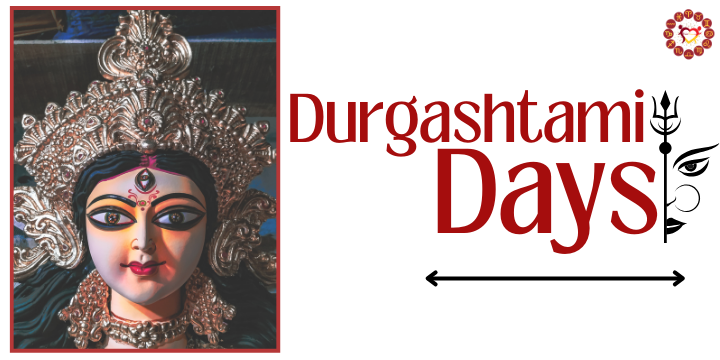
Durgashtami is otherwise called Mahashtami and is one of the most important days of Hinduism, which happens on the eighth day or Ashtami of the Shukla Paksha during the Ashwin month. In Hinduism, it occurs during the waxing moon in the months of September and October. This festival is taken to be significant in the worship of Goddess Durga, which signifies power, protection, and godliness. Durgashtami is that festival through which people celebrate victory over evil the good through devotion and rituals.
This festival denotes the victory of goddess Durga over the demon Mahishasura and reminds devotees about the strength of faith, courage, and righteousness. Observing Durgashtami is said to bring the blessings of happiness, health, and prosperity to the Goddess. She devotees fast, performs special pujas, and organizes cultural programs to celebrate her divine energy. In the Kanya Puja ceremony, young girls are honored as representatives of the Goddess. Beautifully decorated temples and resonating vibrant prayers in the atmosphere create an aura of spirituality.
Meaning and Importance of Durgashtami Days

Durgashtami holds very rich spiritual value. Here the divine power of women was symbolized in Goddess Durga, reminding everybody about her importance as a great protector and destroyer of evils. The word “Durgashtami” combines “Durga” for the goddess and “Ashtami,” for the eighth day.
It marks the culmination of fierce devotion during Navratri and symbolizes the Goddess’s readiness to protect her devotees from harm. Culturally, Durgashtami symbolizes the deep Indian traditions of spirituality and celebrates the empowerment of the divine feminine. Families, communities, and temples unite to pay homage to Goddess Durga’s compassion, valor, and justice. The rituals and stories of this day evoke people to hold on to righteousness, maintain inner balance, and create positivity in life.
Rituals and Practices of Durgashtami Days

Devotees maintain a fast for the whole day and refrain from grains and salt. Fruits, milk, and simple edibles constitute the diet on that day. The core puja revolves around reading Durga Saptashati scripture detailing the valorous deeds of Goddess Durga. Devotees perform aarti along with ghee lamps and worship her to garner her blessings in the form of prayers.
Kanya Puja is a prime ritual for Durgashtami, where the girl is regarded as Goddess Durga and worshipped. They are offered food, gifts, and respect as part of the ritual. The grand prayers, processions, and cultural programs are all done by the temples while the community comes to participate in the celebrations. It is believed that viewing Durgashtami with faith and devotion will purify the soul, attract prosperity, and bring the Goddess’s protective energy into one’s life.
Types of Durgashtami Days

Durgashtami can be observed differently in varying regions and cultures. Culturally, people believe different things, thus giving diverse forms to these types reflecting the rich Indian spiritual heritage.
1. Maha Ashtami (Main Durgashtami)
- This is the most widely observed form of Durgashtami, on the eighth day of Navratri. Durgashtami, one of the most holy days, is devoted to the worship of divine might and grace of Goddess Durga. It is that day of strength, seeking her favors, and celebrating her victory over evil powers.
- The rituals of this very day incorporate grand pujas with fasting and rituals such as Kanya Puja wherein young girls are revered because they are the manifestations of Goddess Durga.
- Beautiful decorations in temples and houses and special prayers are offered to seek the Goddess’s protection and prosperity.
2. Bhadrakali Ashtami:
- In places such as Kerala, Durgashtami coincides with Bhadrakali worship, in which the devotees worship the fierce form of the Goddess. fasting, Kanya Puja, and reading the sacred texts help the devotees connect with the Goddess to purify their minds and souls.
- This type of celebration emphasizes temple rituals, offerings, and cultural programs. This is an aspect that brings out the warrior and protective features of the Goddess.
3. Virashtami:
- In some traditions, Virashtami celebrates the martial prowess of Goddess Durga. Stories include her defeating demons such as Mahishasura.
- This represents the victory of good over evil. Communities may stage reenactments of her legendary battles.
Each type of Durgashtami celebrates devotion to Goddess Durga while representing regional diversity in practice and rituals.
Benefits of Durgashtami Days

Observation of Durgashtami is believed to bring various spiritual and worldly benefits. It helps devotees connect with Goddess Durga’s divine energy and brings in inner strength and self-confidence. Doing the rituals and fasting on this day cleanses the mind and body of the person and removes all sorts of negativity, thereby enhancing spiritual growth. Devotees who perform Durgashtami with great dedication find inner peace and a feeling of fulfillment.
The blessings of Goddess Durga are believed to bring protection from harm, the resolution of problems, and the fulfillment of desires. Families who perform Kanya Puja receive blessings for prosperity, happiness, and good health. This will be cultural, as everyone comes together in celebration and worship and in sharing their traditions.
Stories and Legends of Durgashtami Days

Durgashtami is filled with myths that depict the power as well as the grace that surrounds Goddess Durga. Among the most popular, the stories that have long been associated with this particular day are those of her fearlessness in battling Mahishasura, the wicked demon king. According to the mythological story, the gods, who were unable to vanquish Mahishasura, requested that they seek the assistance of Goddess Durga.
Wielding divine weapons and abundant power, she fought for nine days and killed the demon on the eighth day of battle, which is now called Durgashtami. This victory speaks to the triumph of good over evil. Another very popular story tells of how Goddess Durga manifests from the collective energies of various gods to reinstate peace and order in the universe. These myths inspire the devotees to believe in the power of good and to be steadfast in their fight.
Key Takeaways
1. Durgashtami is one of the most spiritual days; it is a day where the divine power and grace of Goddess Durga are worshipped.
2. It’s a day of strength to seek her blessings and her victory over evil. The rituals of the day like fasting, Kanya Puja, and reading the sacred texts connect the devotees with the Goddess to purify their minds and souls.
3. Durgashtami promotes spiritual growth along with positive thinking and strengthens relations within families and communities.
4. Tales and myths associated with this day fuel the confidence, faith, and dedication towards righteousness.
5. Celebrating Durgashtami not only preserves cultural traditions but also highlights the importance of respecting women and acknowledging their divine role in society.
In general, Durgashtami is a day of devotion, celebration, and gratitude, which gives an opportunity to experience divine blessings, inner peace, and a renewed sense of purpose in life.