
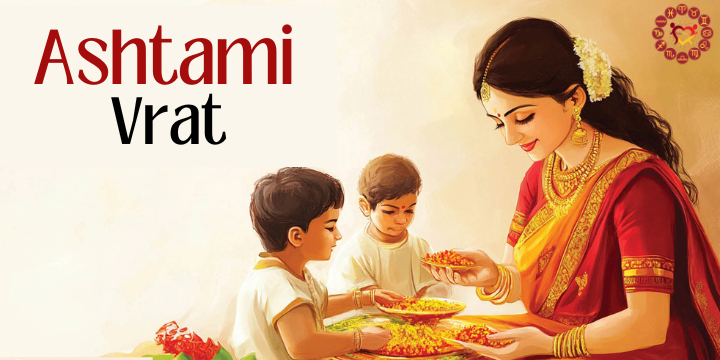
Ashtami Vrat is a sacred fast ritual on the eighth day of a fortnight in the Hindu calendar. The fast could be dedicated to Goddess Durga or Lord Krishna, depending on the type of Ashtami. Its importance in Hindu tradition surpasses any other form of reverence, for it symbolizes devotion, discipline, and reflection. Durga Ashtami, Navratri, is the day to celebrate Goddess Durga’s victory over evil and Krishna Janmashtami is the birthday of the Lord Krishna.
It is believed that with this vrat, a man gets divine blessings, purifies his body, and gains peacefulness in his heart. Fasting on Ashtami helps improve focus and boosts good health. Ashtami Vrat is an aesthetic method through which one demonstrates one’s love and obedience towards it by seeking spiritual improvement. Hence, it is also an appreciated ritual in the Hindu tradition.
Meaning and Significance of Ashtami Vrat

The word “Ashtami” is from the Sanskrit language, which represents the eighth day. There is extreme spiritual importance because it is also a ritual towards great gods like Goddess Durga and Lord Krishna. Durga Ashtami During Navratri is dedicated to Goddess Durga’s divine power and the defeat of Mahishasura, depicting victory for good. Krishna Janmashtami: It marks the birthday of the divine protector who maintains dharma, the Lord Krishna.
This vrat is said to represent commitment, trust and removing barriers. It occurs twice a month – once in Shukla Paksha, that is during the brightening phase, and another during Krishna Paksha, which indicates the decrease of the moon. The observation of vrat is considered to yield spiritual growth, fulfillment of desires, and blessings from the divine. In the fast and prayers, the devotees try to cleanse their minds and souls, and hence, this is a very enriching observance.
Types of Ashtami Vrats

Ashtami Vrat has several major observations, each with its distinct purpose.
1. Durga Ashtami
- It is one such observance that falls within Navratri and honors the goddess Durga and her triumph over evil.
- Devotees make special pujas and fast to get her blessings.
- The day involves pujas, chanting of mantras, offering of bhog, and the traditional Kumari Puja, where young girls are revered as symbols of the goddess.
2. Krishna Janmashtami
- It also known as Gokulashtami, relates to the birth date of Lord Krishna.
- Devotees do not sleep at night, pray by saying their names, and do rituals to worship his divine presence.
3. Radha Ashtami
- It is based on the birth date of Radha Rani, the symbolic delight for love and devotion, which the devotee worships through prayers and bhajans.
- Every Ashtami vrat is different in its rituals and significance. That inspires devotees to deepen their faith and embrace the values that these deities represent.
- These rituals are not just spiritual representations but also reminders of the rich cultural heritage of Hinduism.
Rituals and Practices of Ashtami Vrat

The rituals of Ashtami Vrat begin with a sense of purity and devotion. Devotees wake up early, take a holy bath, pray before their chosen deity, and take the vow or Sankalp to keep this fast. They sit through the day meditating, chanting mantras, and performing particular rituals such as flower offerings, lighting lamps, and so on. The practice of fasting is very integral; many completely abstain from grains and eat fruits, milk, or a satvik diet during the period. Evening prayers involve a special puja, either reciting or listening to the Ashtami Katha, and lighting diyas in honor of the deity. The rituals are slightly different between Durga Ashtami and Krishna Janmashtami, but the theme is always devotion and discipline. These practices help people focus on their spiritual objectives and infuse peace and positivity into their lives.
Benefits of Ashtami Vrat

Ashtami Vrat has numerous spiritual, physical as well as mental benefits. It brings devotees closer to the divine energies as well as get past wrongdoings and brings fortunes for a healthy life in the store. Physically, fasting helps detoxify the body, improves digestion, and enhances overall health. The vrat mentally promotes discipline, patience, and peace to concentrate on spiritual growth. Inspires faith, courage, and perseverance among its followers through its stories and rituals related to Ashtami Vrat and reminds them to stay in life with positive values. An experience of full fulfillment and harmony that one has been devoted to this vrat, makes it the cherished tradition of Hinduism.
Stories and Legends of Ashtami Vrat

Ashtami Vrat is well-rooted in the mythological tales and legends. Durga Ashtami honors the triumph of Goddess Durga over Mahishasura, exemplifying good over evil. Devotees worship her bravery and powers with special puja and other rituals. Krishna Janmashtami celebrates the birth of the Lord Krishna, who overthrew demonic energy and resurrected the right. Puranas and Bhagavad Gita stories explain how Ashtami Vrat enabled people to win difficult circumstances and remain devoted to dharma. These stories teach followers to live righteous lives, deepening their relation to God. By studying the myths, devotees derive virtues like bravery, commitment, and perseverance, and hence the vrat becomes spiritually enriching.
Key Takeaways
1. Ashtami Vrat is a devotion mixed with discipline and reflection of oneself. This event has provided an opportunity for people to fortify their association with the energies of gods either with Durga Devi or Krishna Bhagawan.
2. The vrat offers spiritual, physical, and mental benefits such as divine blessings, purification, and inner peace. The rituals and storytelling associated with Ashtami Vrat emphasize faith, resilience, and righteousness in winning over the challenges of life.
3. This sacred tradition not only nurtures one’s spiritual growth but also reminds one of the rich cultural and spiritual heritage of Hinduism.
4. True observance of Ashtami Vrat leads to a happy and peaceful life.
5. It strengthens faith in Goddess Durga or Lord Krishna, enhancing spiritual growth.
6. Fasting and rituals foster self-control and concentration.
7. The film emphasizes the richness of Hindu traditions and mythology.
8. Life Lessons Stories related to Ashtami qualities of bravery, tenacity, and devotion. It provides for spiritual, physical, and mental well-being.